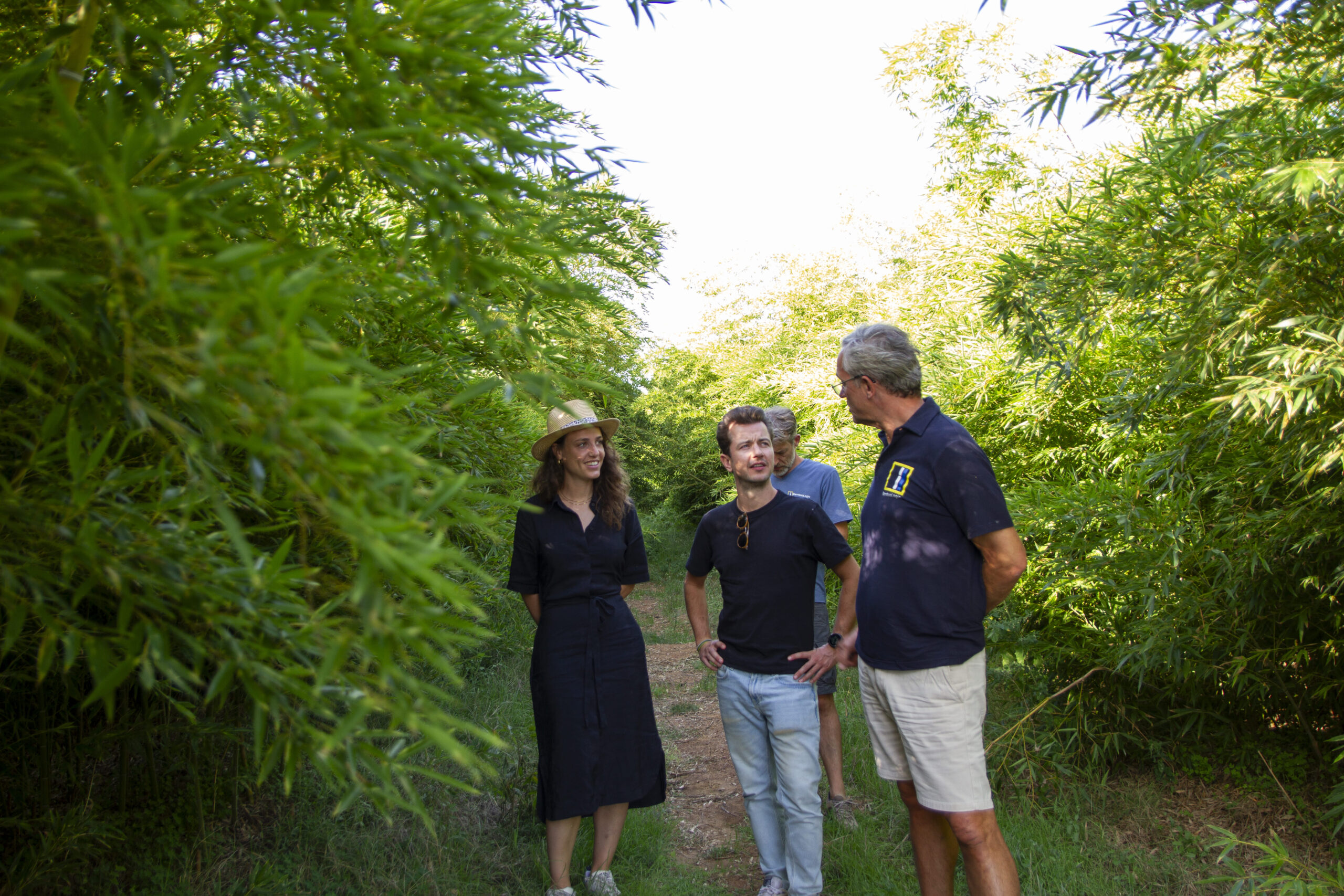
Project Bamboo focuses on reforestation and sustainable bamboo cultivation in Alcoutim (Portugal), in partnership with Bamboologic. Bamboo grows rapidly, sequesters large amounts of CO₂ and can be harvested for years without damaging the plant. Additionally, the plantation aids in soil restoration, water management, and biodiversity.
You can read more in the information brochure.
Impact & Return

Impact

Return
Project BAMBOO Video

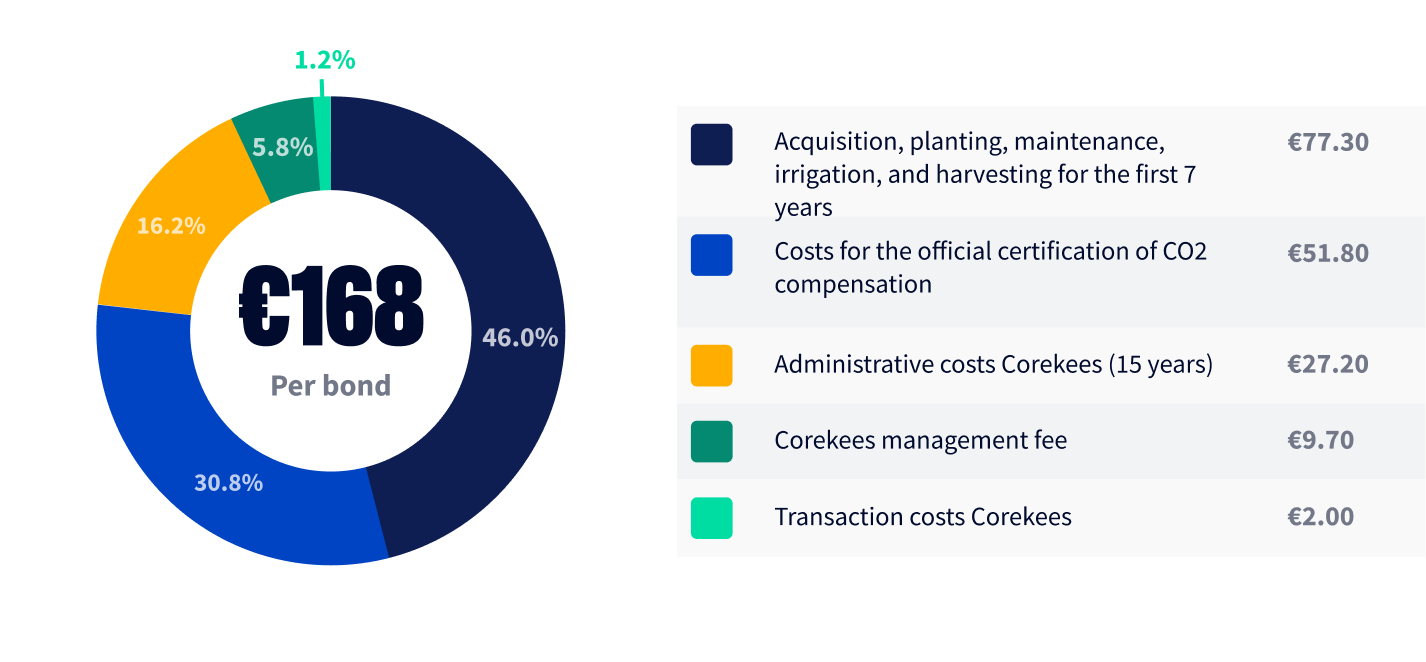
WHERE DOES YOUR MONEY GO?
HOW PROJECT BAMBOO WORKS


News about Project BAMBOO

8 questions for João from Project Bamboo
João Ludovico, Carbon, Data & Impact Manager, discusses investing in and growing bamboo.
Download the brochure
The brochure provides more information about Project Bamboo. After filling in your details, we will send it immediately via e-mail. Nice and easy!
Frequently asked questions
Why is bamboo sustainable?
Bamboo is a renewable and incredibly versatile crop. Although it is as hard as wood, it is actually a type of grass. It grows extremely quickly (some species grow as much as 121 centimetres per day!) and, depending on the species, can live for up to 120 years. It requires little maintenance, does not need pesticides or herbicides, and needs very little water to grow. Partly because of this, maintenance costs are relatively low. Finally, bamboo is incredibly sustainable because it can be used as a raw material for food, clothing, bio-based building materials and composites.
Who buys the bamboo?
Mainly industrial manufacturers, construction companies and event agencies. The first two use bamboo fibres in their production processes, and within the events sector, large bamboo poles are used for decoration and as flagpoles. Outside these three main sectors, however, there are so many different applications for bamboo that the number of potential customers is countless.
Who is your local partner?
Bamboologic is a Dutch company with an office in Nijmegen, nurseries in Belgium and northern Spain, and bamboo forests in southern Portugal. Bamboologic is the very first European producer of low-footprint bamboo and derivative products such as bamboo fibres for the textile and composite industries, bamboo pulp for the paper industry, and bamboo poles for the construction and events sectors.