





12 September 2023, by Claudia Esveldt
8 Reasons to Invest in the Beehive Project
How important are bees? It’s difficult to say: if you ask 10 different experts this question, you’ll get 10 different answers. Fortunately, there is one thing we do know for sure: bees are important. That is why, with Project Beehive, we are investing in bees and in Kenyan farming communities. As you have come to expect from us, the proverbial knife cuts both ways. Why are bees important? We are happy to explain. Here are eight reasons to invest in Project Beehive.
1. Bees pollinate crops
Bees play a role in pollinating many crops. They help transfer pollen from flower to flower. This is necessary for the formation of seeds and fruits. They are among the most effective pollinators and help plants produce fruit, vegetables, nuts and other crops. According to some, they pollinate about two-thirds of our most important crops. Others say the answer is closer to one-third. Although there is no scientific consensus on the exact number, we do know for sure that they pollinate our crops. Why is that important? You can read about that in point 4!
2. Bees are endangered
Bee mortality is a serious problem. It is caused by pesticides, habitat loss, disease, climate change and monocultures. Pesticides harm bees, and habitat loss due to deforestation and urban development limits their access to food sources. Climate change and diseases such as the Varroa mite (a parasite that attaches itself to bees, sucks up their body fluids and thus causes weakness, disease and death in bee colonies) exacerbate the problem! Meanwhile, monocultures in agriculture also result in an unbalanced diet. All these factors are causing bee populations to decline worldwide.
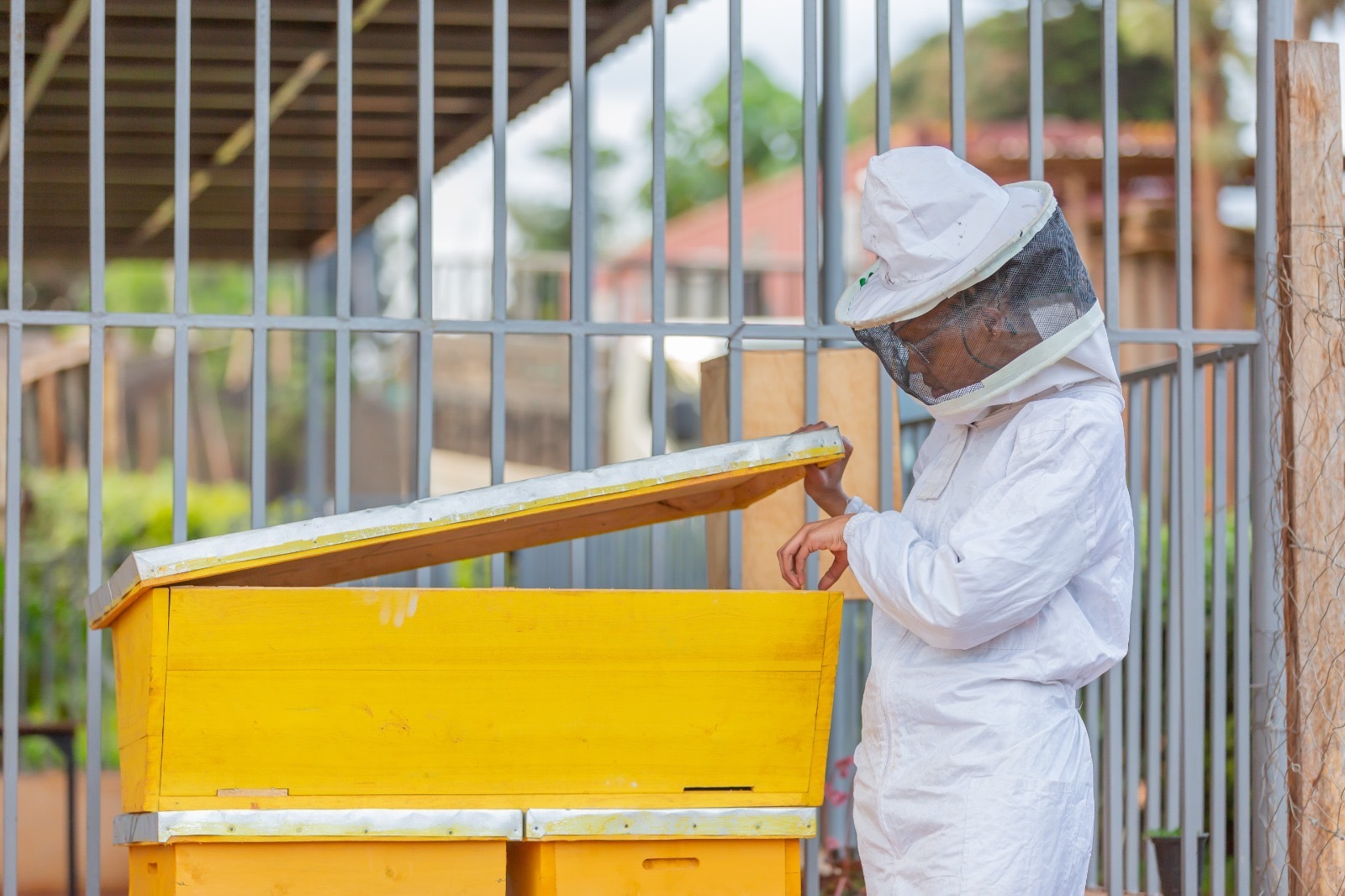
Bees are endangered and they are safer in beehives than in the wild.
3. Bees are beneficial for biodiversity
Bees help maintain biodiversity by pollinating various plant species, including those that provide habitat and food for other wildlife. The pollination process can lead to genetic diversity within plant populations, which is crucial for resilience and adaptation to changing conditions. When bees pollinate different plant species, they also help these plants to reproduce and produce seeds. This not only promotes the survival of individual plant species, but also contributes to the diversity of flowering plants in an area. This, in turn, provides a wide range of food sources for other animals, such as insects, birds and small mammals.
4. Bees ensure our food production
Take almonds, for example. They would not exist without bees. Another example is coffee. It would still exist without bees, but it would become rare and expensive. The coffee flower can only be pollinated within a timeframe of three to four days. If this does not happen during that short period, we can forget about our daily cups of black gold! Apples, avocados, onions and various types of berries are also very dependent on bees for pollination. What would happen if we no longer had bees to pollinate all these crops? We would probably survive, but our diet would become much more boring…
5. They contribute to agricultural economies
Bees support the agricultural process and provide an income for millions of farmers and agricultural workers worldwide. This is also the case with our Beehive Project. With this project, we enable Kenyan farmers to generate additional income. It is expected that one beehive will earn them €28 per year. At first glance, this may seem modest, but it can make the difference between sending your children to school or not.

Harvesting beehives provides additional rural income
6. Bees ensure higher crop yields
The pollination of fruit, vegetables and nuts by bees ensures that people have access to nutritious and varied food. Through pollination, bees not only improve the quantity of fruit and vegetables harvested, but also their quality. This leads to significant improvements in the yield and market value of agricultural products. Although the exact increase may vary depending on the crop and conditions, studies show that pollination can often increase yields by tens of percent!
7. Bees produce honey.
Let’s state the obvious: bees produce honey. Honey is not only delicious, but also very healthy! Honey contains an abundance of antioxidants, including phenols, enzymes and flavonoids. These substances play a role in neutralising ‘free radicals’, substances that can damage our bodies. Furthermore, antioxidants in honey have been shown to reduce the risk of heart attacks, strokes and cancer.

Honey is extremely healthy and full of antioxidants.
Bees produce (raw materials for) medicines
Bee products such as honey, propolis and bee venom are used in traditional medicine for their potential health benefits. Honey, for example, has been used for centuries for its antibacterial and wound-healing properties. Propolis, a sticky substance that bees collect from tree bark and buds, is used as a medicine because of its antibacterial, anti-inflammatory and antioxidant properties. Finally, bee venom is used as an injection to treat bee sting allergies and as a therapy for numerous conditions.
Invest in Project Beehive
Why are bees important? Now you know: for many different reasons! Would you like to contribute to improving the bee population and provide Kenyan farmers with some extra income? Then invest in Project Beehive. You can buy a beehive for €103. In addition, you will receive interest on your outstanding loan every six months during the seven-year term of the project.

