




23 December 2024, Claudia Esveldt
– English interview –
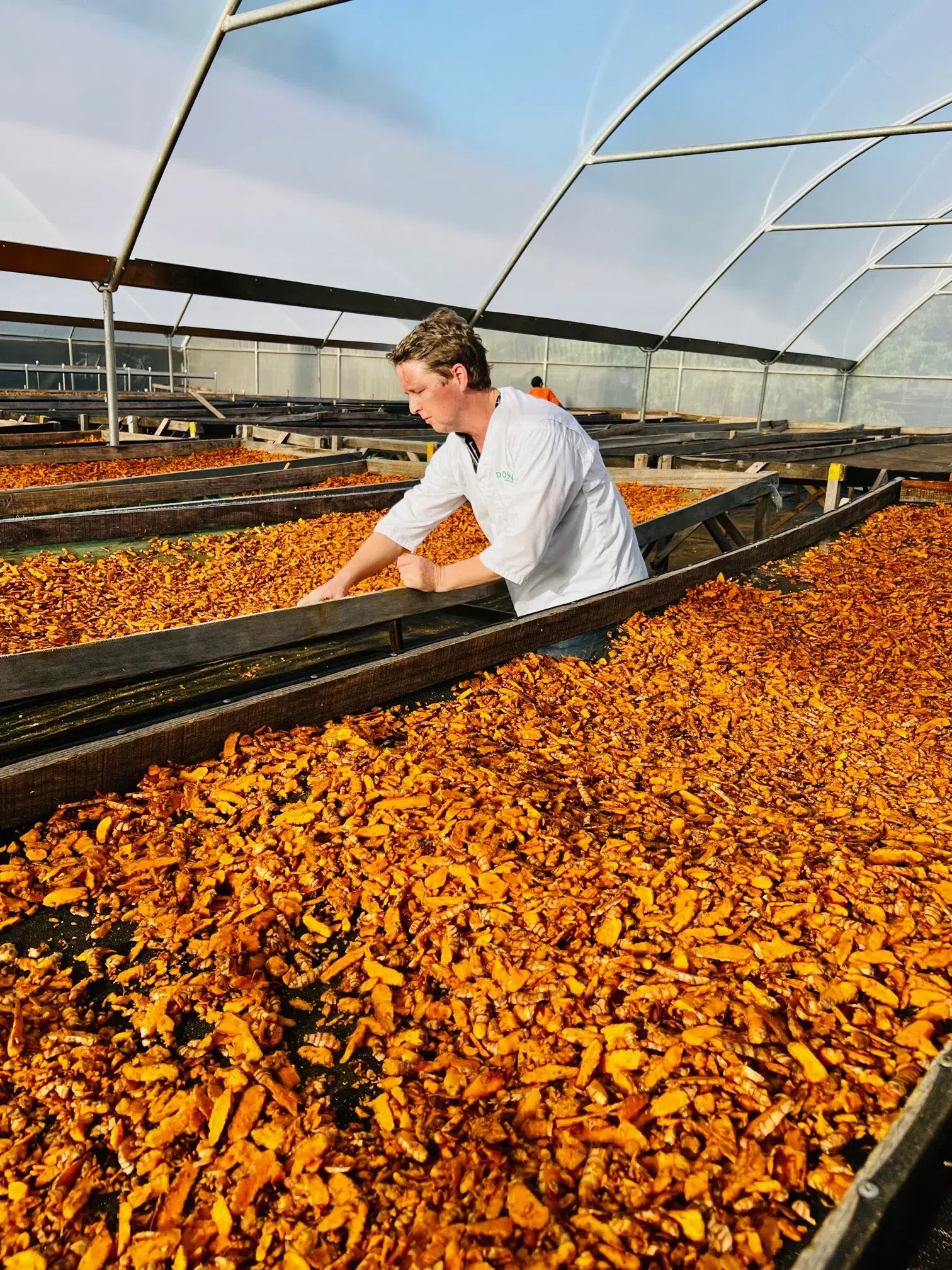
To celebrate our new campaign for Project Specerij (Project Spice), we interviewed the founder of our local project partner Doselva, Jefferson Shriver.
With this investment opportunity in Nicaragua and Honduras, we help coffee farmers diversify their supply by growing bio-certified crops. This way, they improve the biodiversity of their land and increase their income.
We sat down with Jefferson to learn more about the start of Doselva, his personal motivation and his day-to-day work.
When did you first become aware of the situation of coffee farmers in Central America?
I first came into contact with the situation of coffee farmers in Central America in 1995 when I worked for a social impact loan fund in Nicaragua. We made some of our largest loans to coffee cooperatives which had smallholder farmer members growing coffee on small plots in rich agroforestry systems. I was intrigued by the profitability of coffee along with its benefits to the ecosystem. In a rural landscape largely degraded by agriculture, coffee was a notable exception to the rule, contributing to a forested landscape as a shade-loving crop.
What made you want to take action on this issue?
Coffee farmers throughout Central America were devastated by the leaf rust outbreak beginning in 2010, and around this same time my own coffee farm was also suffering the impacts of a longer and hotter dry season. Many coffee farmers who needed to pivot to alternative cultivars were not finding many profitable, sustainable options.
On a personal level, it was obvious to me that farmers and their coffee-growing ecosystems benefited from multi-story agroforestry systems as an asset to their livelihoods and to the rural landscape. Seeing this gap in available high-value, shade-grown alternatives to coffee was my primary impetus to take action. Through my work in places like Madagascar and Uganda, I saw farmers growing vanilla, black pepper, cloves and cinnamon in diversified agroforestry systems as a pathway out of poverty.
I saw an opportunity to promote these crops and other botanicals in Central America amongst coffee farmers searching for alternatives. These experiences sowed the seeds of what became Doselva when we founded the company in 2017.
Which milestone from the past few years are you personally most proud of?
Witnessing farming families place their trust in us to farm a crop they have never grown, and as a result expand their incomes and employment has been great to see. We see these same farmers expand their asset base and grow the crop or other crops we promote on more of their farmland, which would never happen if the crop was not profitable.
So this farmer uptake, coupled with the position we are establishing in the market as a reliable supplier of traceable, organic, high-quality products, gives me a lot of satisfaction.
What does a day in the life look like as the chief executive officer of an impact-driven company?
My days are as diverse as the services we provide to farmers and customers. I manage a web of relationships – with customers, staff, service providers, and farmers. I frequently create content delivered in writing or public speaking regarding our business and impact model. I spend a lot of time planning, and when not everything goes as planned, put out the occasional fires as well. I am constantly working with our team to promote teamwork across divisions, as well as innovation and resourcefulness.
I also like to remind staff and stakeholders about the inspirational aspect of our work and mission – that we are having a positive impact on farmers’ lives, that we are first movers in the space, that what we are planting and selling in spices is natural medicine providing healing for human health. These are all critical aspects of our company culture that need tending on a daily basis to maintain its vitality.
What makes Project Spices so special?
What I love about this work is the way it brings so many different people together to achieve a common goal. From farmer to customer, Doselva is navigating a series of relationships in between to ensure that value is created on every link of our supply chain. There is something very special about being able to generate both economic value and environmental conservation simultaneously. If we can do right by the small farmer and the planet in this endeavour, all while growing a profitable business of our own, it will have been worth the effort and sacrifice.
What are you most excited about for the coming year?
I am excited about the strategic partnerships we are developing and deepening with farmers, customers and investors, deepening our trust in one another and dreaming big about what we can do to make change in the world through spices.
Project Specerij
In the autumn of 2023, we launched the pilot campaign of Project Specerij. With Project Specerij, we help coffee farmers in Nicaragua and Honduras. The changing climate has significantly reduced their income, sometimes by as much as 50%. With your investment, these farmers can transition to growing higher-value organic crops, such as ginger, turmeric, or cardamom.
Following a successful campaign and a year of development, we paid out returns for the first time in the autumn of 2024.
This marked the beginning of a new investment opportunity for Project Specerij, with new conditions but the same positive impact. We listened to the request from our investor community: a project with a shorter term.
We are launching the Spice Subscription. With this, you can purchase one or more bonds monthly, with a 1-year term and an expected interest rate of 7.0% per annum. This allows you to diversify your investment and invest monthly with impact.

