Project Beehive

Kutus, Kenia

Project Beehive supports Kenyan farming communities by training them in safe and sustainable beekeeping. Each farmer receives a beehive and practical guidance, enabling them to produce and sell honey, wax and propolis themselves.

This creates a new source of income in regions where harvests are uncertain and incomes fluctuate greatly. At the same time, bee colonies play an important role in restoring biodiversity: a single hive pollinates a large area and enhances the growth of fruit trees, flowers and food crops. The project thus delivers both social and ecological benefits. Bee populations improve, farmers gain control over their income and local ecosystems flourish thanks to better pollination. You can read more in the information brochure.

Impact & Return

Impact

  • Provides Kenyan farmers with a stable, additional source of income thanks to the sale of honey and bee products.
  • Strengthens biodiversity because bee colonies pollinate a large area and thus support crops, trees, and ecosystems.
  • Actively contributes to the restoration of bee populations, which are declining worldwide but are essential for food security.

Return

  • Annual expected return of 3.2% on your investment.
  • Security & transparency regarding your investment.
  • At the end of the term, both the principal and the interest will be repaid.

Project BEEKHIVE video

expected return of 3.2% per year

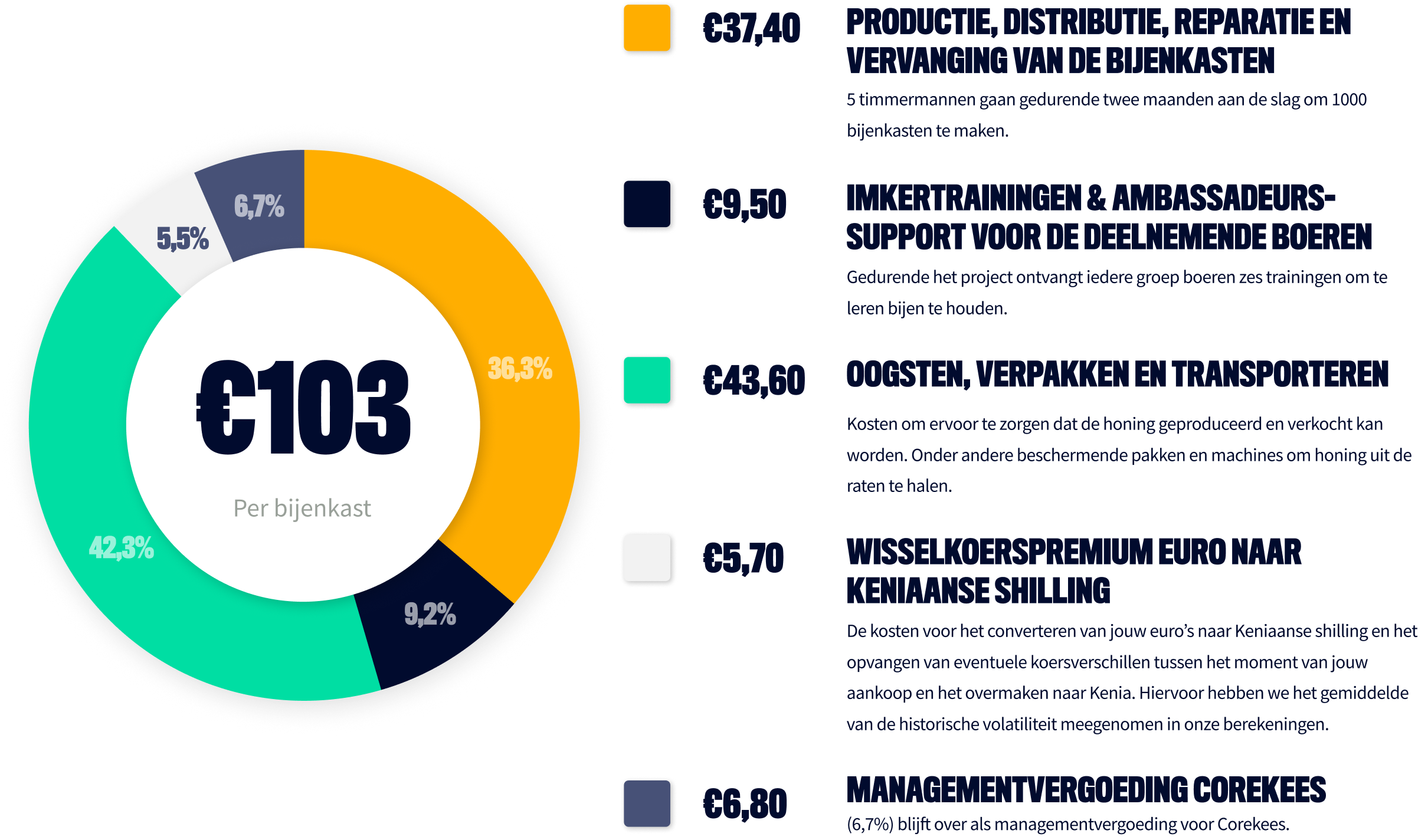
Where does your money go?

HOW THE PROJECT WORKS

Step 1

From training to beehive

Kenyan farmers receive training and are given a beehive that they manage themselves. They learn how to keep bees safely and sustainably and what is needed to maintain a healthy bee colony. Together, the hive and their knowledge form their new source of income.

Farmer training to become a beekeeper

Step 2

From bee colony to honey

Each hive produces honey, wax and propolis twice a year. The farmer sells these products to our local partner at fixed, fair prices. This creates a stable additional income that is not dependent on the success of a harvest season.

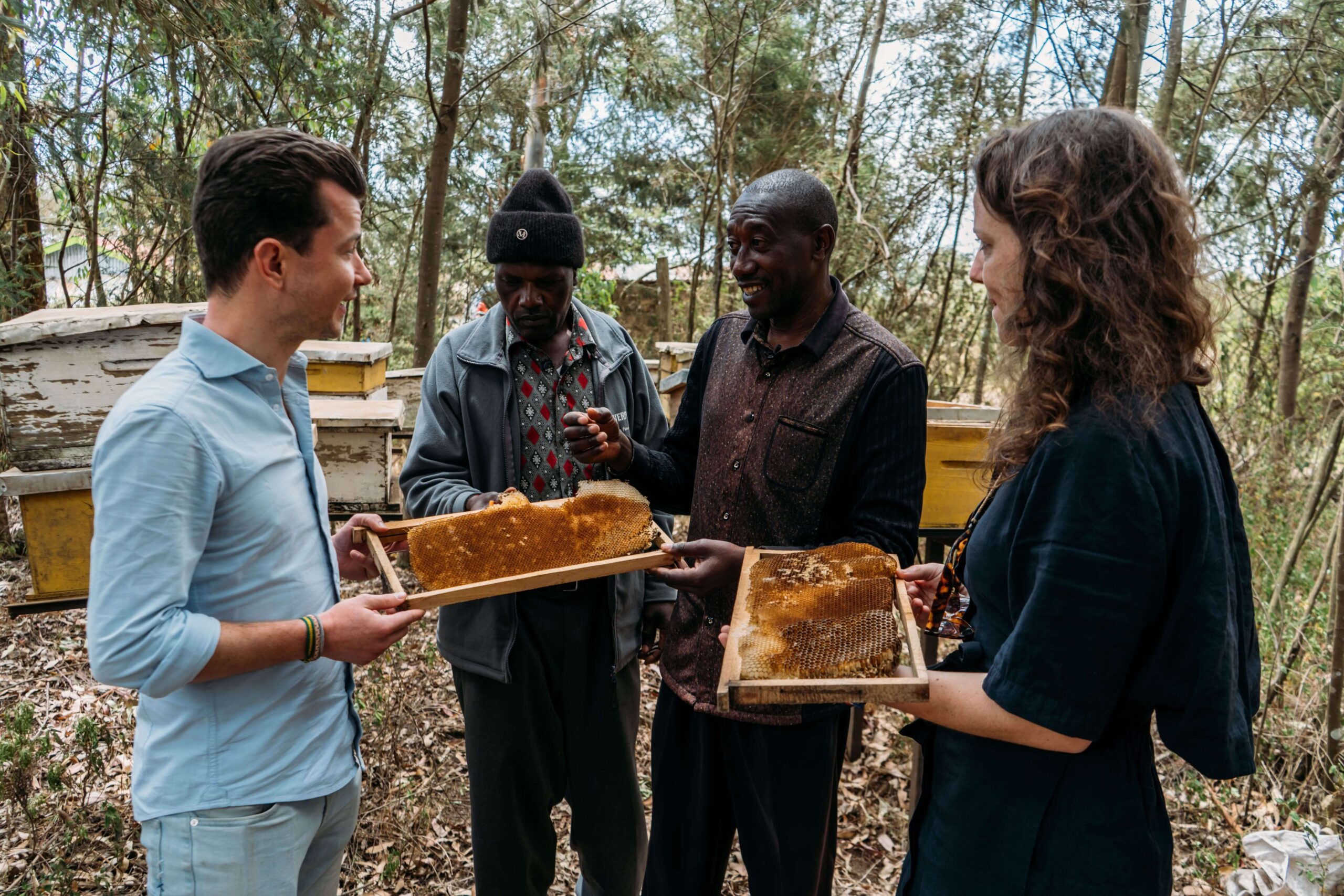
Nick and Tamar from Corekees on a site visit in Kenya


News about Project beehive

Sustainability

Why are bees important?

Beehive Project

Read about why investing in bees is an excellent choice.

View item

Download the brochure

The brochure provides more information about Project Beehive. After filling in your details, we will send it immediately via e-mail. Nice and easy!

Frequently asked questions

Why are beehives sustainable?

Bees pollinate crops and are therefore essential to our food production. Worldwide, almost 70% of crops depend on bees. At the same time, bee populations around the world are under pressure. Beekeepers have been seeing declines in bee colonies for years. The causes of this are wide-ranging: pesticide use, monoculture and advancing urbanisation threaten the health of bees and, with it, our food supply. This makes bees perhaps the most important part of global food production. They ensure that we have food to eat. By investing in housing for bees, we are not only taking care of them, but also ourselves.

Who are the beekeepers?

The beekeepers are experienced professionals hired by the Akili Group, our local partner, to share their knowledge. Prior to the roll-out of the project, all farmers receive professional training over a period of two to three months, and the project manager associated with the project continues to actively monitor the project for two years to ensure that the level of knowledge remains up to standard. The managers’ salaries are one of the biggest costs of this project, but we are happy to pay this because we believe that sharing knowledge is where the most value is created.

Who is your local partner?

The founder of the Akili Group, Haron Wachira, was a consultant for the United Nations for two years. His assignment was to identify the causes of persistent poverty in certain Kenyan districts and to develop solutions to combat it. His research showed that the solution was to set up micro-enterprises that would create meaningful employment on a large scale. The Akili Group’s business model is inspired by this study. The company creates profitable models for sustainable and economic development in rural households.
€52.736
153 Investors
Risk Score Risk Score
Sold out
  • icon–bankcard Created with Sketch. €103 per bond
  • icon–transfer Created with Sketch. ROI: 103 / year
  • icon–hourglass Created with Sketch. Term: 7 years
Download information brochure
Status: Op schema

2000+ Corekees investors went before you

Olle de Geest
Rating: 5/5

It's great to invest in a tangible way, make an impact and learn a lot about the projects through regular updates!

Marlena Fishall
Rating: 5/5

Corekees is accessible, which is great. You don't need to be a financial expert or invest a large amount of money to participate. I used to find investing very intimidating and complicated, but with Corekees, it's simple and accessible.

Pieter Brouwer
Rating: 5/5

A very good way to invest easily and sustainably. You can see exactly where the money is going and where the returns are coming from. Highly recommended!

Other projects

Our projects are all different but always have one thing in common: they give sustainability economic value.

View all projects
Available

Project Spices

Granada, Nicaragua
Risk Score Risicoscore
€408.450
  • icon–bankcard Created with Sketch. €100 per bond
  • icon–transfer Created with Sketch. ROI: 7% / year
  • icon–hourglass Created with Sketch. Term: 1 year
View projects
Closed

Project Jackfruit

Kampala, Oeganda
Risk Score Risicoscore
€240.722
  • icon–bankcard Created with Sketch. €74 per bond
  • icon–transfer Created with Sketch. ROI: 7,4% / year
  • icon–hourglass Created with Sketch. Term: 3 years
View projects
Available

Project Bamboo

Santa Marta, Alcoutim, Portugal
Risk Score Risicoscore
€440.872
  • icon–bankcard Created with Sketch. €168 per bond
  • icon–transfer Created with Sketch. ROI: 6,7% / year
  • icon–hourglass Created with Sketch. Term: 15 years
View projects
Available

Project Amazon

Nova Carolina, Brazilië
Risk Score Risicoscore
€507.150
  • icon–bankcard Created with Sketch. €99 per bond
  • icon–transfer Created with Sketch. ROI: 7,3% / year
  • icon–hourglass Created with Sketch. Term: 17 years
View projects
Available

Project Pongamia

Carmelo Peralta, Paraguay
Risk Score Risicoscore
€1.539.148
  • icon–bankcard Created with Sketch. €22.50 per bond
  • icon–transfer Created with Sketch. ROI: 7,8% / year
  • icon–hourglass Created with Sketch. Term: 20 years
View projects
Closed

Project Beehive

Kutus, Kenia
Risk Score Risicoscore
€52.736
  • icon–bankcard Created with Sketch. €103 per bond
  • icon–transfer Created with Sketch. ROI: 103 / year
  • icon–hourglass Created with Sketch. Term: 7 years
View projects
Closed

Project Peatland

Gnarrenburg, Duitsland
Risk Score Risicoscore
€213.749
  • icon–bankcard Created with Sketch. €53 per bond
  • icon–transfer Created with Sketch. ROI: 7,1% / year
  • icon–hourglass Created with Sketch. Term: 5 years
View projects
Closed
Risk Score Risicoscore
€153.985
  • icon–bankcard Created with Sketch. €65 per bond
  • icon–transfer Created with Sketch. ROI: 8,5% / year
  • icon–hourglass Created with Sketch. Term: 5 years
View projects
Closed

Project Coco

Simeulue, Indonesia
Risk Score Risicoscore
€190.300
  • icon–bankcard Created with Sketch. €50 per bond
  • icon–transfer Created with Sketch. ROI: 8,5% / year
  • icon–hourglass Created with Sketch. Term: 10 years
View projects