





8 February 2022, by Claudia Esveldt
A comparison between two different biofuels
At the start of a working day, most people in the Netherlands have already used palm oil three times without even realising it. Think of shampoo in the shower, toothpaste when brushing your teeth and peanut butter on your breakfast toast. According to the World Wildlife Fund, palm oil is the most widely used vegetable oil on the planet. What few people know is that palm oil is not only used in consumer products, but also frequently as a biofuel. For example, in the transport industry. Many lorries run on blended diesel made from palm oil. Since we claim to know quite a bit about biofuels ourselves, in this blog we will compare palm oil and pongamia oil to determine once and for all which is the best biofuel.
Why do we use palm oil as a biofuel?
Because it is cheap and versatile. 85% of the palm oil used worldwide comes from Indonesia and Malaysia. In these countries, both raw material prices and wages are low, resulting in low oil prices. In addition to being cheap, palm oil is also versatile in use. It has a neutral odour and mixes well with other types of oil. The transport industry makes extensive use of this biofuel because the prices of fossil fuels are constantly rising. This trend is expected to continue in the coming decades. Alternatives such as palm oil and pongamia oil will therefore become increasingly important. We regularly mention that pongamia is a sustainable alternative to fossil fuels. But how sustainable is palm oil actually?
The sustainability of palm oil Palm oil has
the potential to be sustainable. However, the way it is currently cultivated is certainly not sustainable. Greenpeace, among others, has been drawing attention to this issue for years. They particularly cite deforestation and the cultivation process as the main culprits. Due to the strong increase in demand for palm oil over the years, production has also been scaled up. As a result, more and more farmers in South-East Asia, for example, have switched to growing oil palms (the tree whose fruits are the raw material for palm oil). The consequences are disastrous. The jungles that are necessary for the preservation of ecological systems are being cut down and burned to make way for oil palm plantations. Various natural vegetation is lost during logging and is replaced by a monoculture of palm plantations. This also disrupts the natural balance, with all the consequences that entails.
The cultivation and pressing of palm oil also requires a lot of water. After pressing, this water is polluted and is then dumped into nearby rivers, which of course causes environmental damage. In addition, a lot of pesticides are used on the plantations. This is primarily to prevent rats from eating the fruit, but the pesticides also kill other animals in the food chain. All in all, the above factors mean that the current method of palm oil production is not particularly sustainable.
So is it impossible to produce palm oil sustainably?
No, it isn’t. Fortunately, there are still projects that produce palm oil in a sustainable manner. These projects ensure that the palm oil they sell has not been obtained by cutting down rainforest. The quality mark for this is RSPO, which stands for Roundtable on Sustainable Palm Oil. RSPO is a non-profit organisation that brings together the seven links in the palm oil production chain. These links are farmers, traders, consumer goods manufacturers, retailers, banks, environmental organisations and governments. RSPO sets social and environmental conditions to make the entire chain more sustainable. When these conditions are met, the parties receive the RSPO certificate.
How does the oil palm compare to the pongamia tree?
Before we discuss the differences, let’s first take a closer look at the similarities. Both trees thrive best in tropical conditions, within 30 degrees of the equator. In addition, both are extremely suitable for the production of biofuel. They are even among the top four crops with the highest oil production per hectare per year! Respectively, 5,950 litres of oil for oil palms and 4,000 litres for pongamia. However, the oil obtained from the fruits is different. Palm oil can be used for both everyday products and biofuel. In principle, pongamia oil can also be processed into raw material for everyday consumer products, but with a less profitable business model than processing into biofuel. There is also a difference in harvest frequency: the oil palm is ready for its first harvest after three years. Pongamia only after three to four years. In addition, oil palms can yield harvests all year round, while Pongamia can only be harvested once a year. So far, sustainably grown palm oil seems to be better than Pongamia on all fronts. That is true, until you also take into account the so-called carbon intensity.
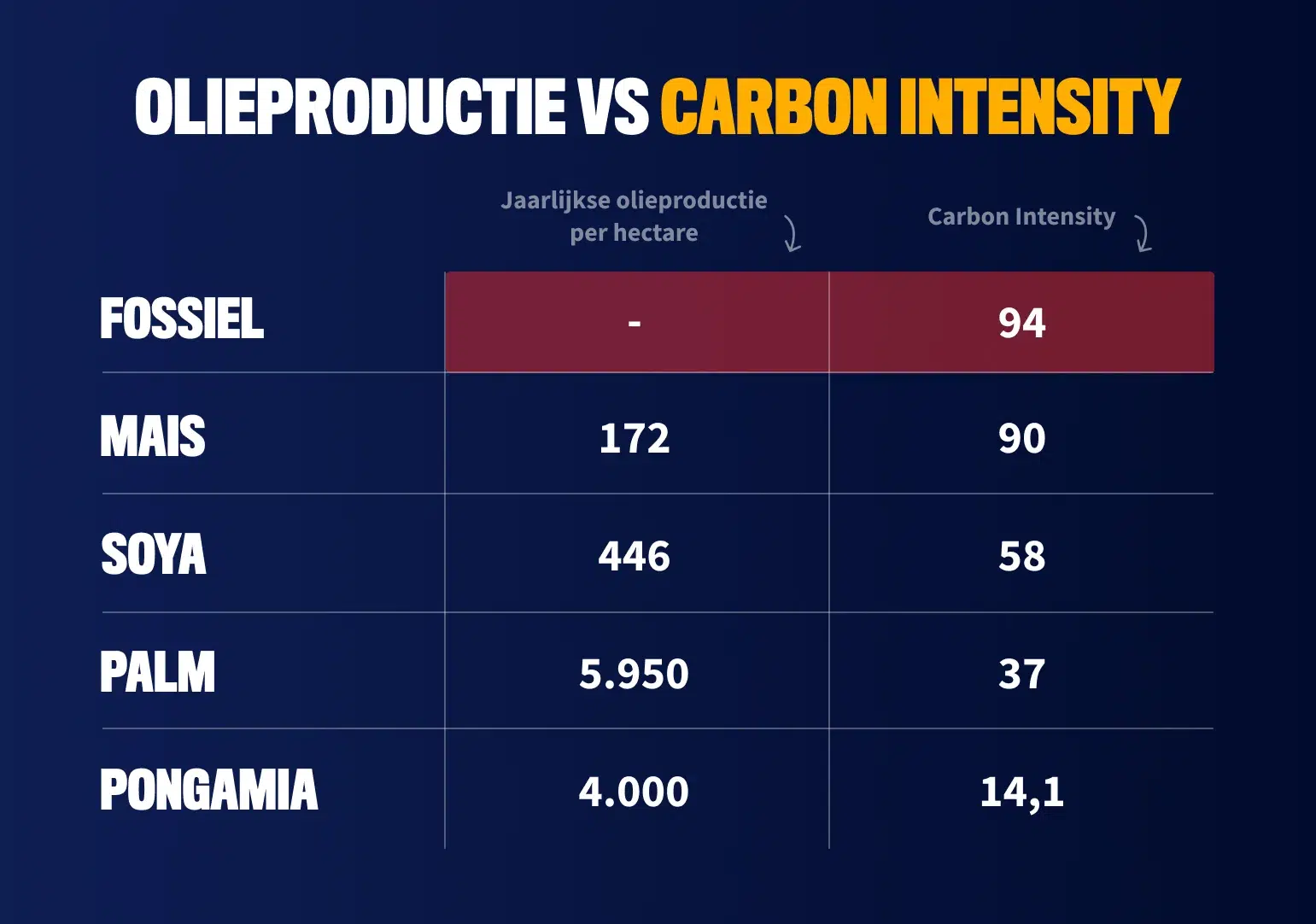
Figure 1: Table showing oil production and carbon intensity
Carbon Intensity?
The relationship between climate and economy is often expressed in terms of emission intensity or carbon intensity. This is a figure representing the greenhouse gas emissions of a particular industry per euro of added value. This figure can be used to compare the environmental impact of different fuels or activities: the higher the emission intensity, the more polluting the product. Guess what? The carbon intensity of oil palm is 37. That of the Pongamia tree is only 14.1.
Let’s wrap it up. Which oil is truly sustainable?
We cannot ignore the fact that the majority of the world’s population uses palm oil on a daily basis. Not only in consumer goods, but also as fuel. The versatility of palm oil is therefore a plus! In addition, the oil is reasonably sustainable during processing and use. However, the way oil palms are generally cultivated is certainly not! Every day, many hectares of jungle disappear to make way for new plantations. Palm oil with an RSPO certificate is an excellent product, but unfortunately certified oil is the exception rather than the norm.
Pongamia oil is less versatile than palm oil. As a result, this oil is currently used exclusively for biofuel. In that respect, it loses out to palm oil. However, because we grow Pongamia on marginal land (land that has been deforested for more than 10 years and is unsuitable for growing food), we do not compete with scarce agricultural land, unlike oil palms grown for fuel. Moreover, we plant relatively few trees per hectare. This prevents monoculture and leaves room for natural vegetation. This is in stark contrast to farmers who are cutting down more and more rainforest to meet the demand for palm oil. When we take all of the above into account and then compare the respective carbon intensities of 37 for palm oil and 14.1 for pongamia oil, pongamia emerges as the undisputed winner in terms of sustainability. As a biofuel, pongamia oil is many times better than palm oil.
Sources:
- https://www.tudelft.nl/citg/onderzoek/stories-of-science/op-weg-naar-duurzame-palmolie
- https://www.greenpeace.org/aotearoa/story/5-problems-with-sustainable-palm-oil/
- https://ce.nl/wp-content/uploads/2021/03/CE_Delft_190370_Vuile_Handen_DEF.pdf
- https://www.bedrijvenbeleidinbeeld.nl/bouwstenen-bedrijvenbeleid/verduurzaming-industrie/verduurzaming-industrie-internationaal
- https://www.greenpeace.org/nl/natuur/478/vragen-over-palmolie/
- http://journeytoforever.org/biodiesel_yield.html
- Corekees' internal sources

