




February 25, 2026, by Quinten Weimer
In our projects we often talk about agroforestry, but what exactly is it?
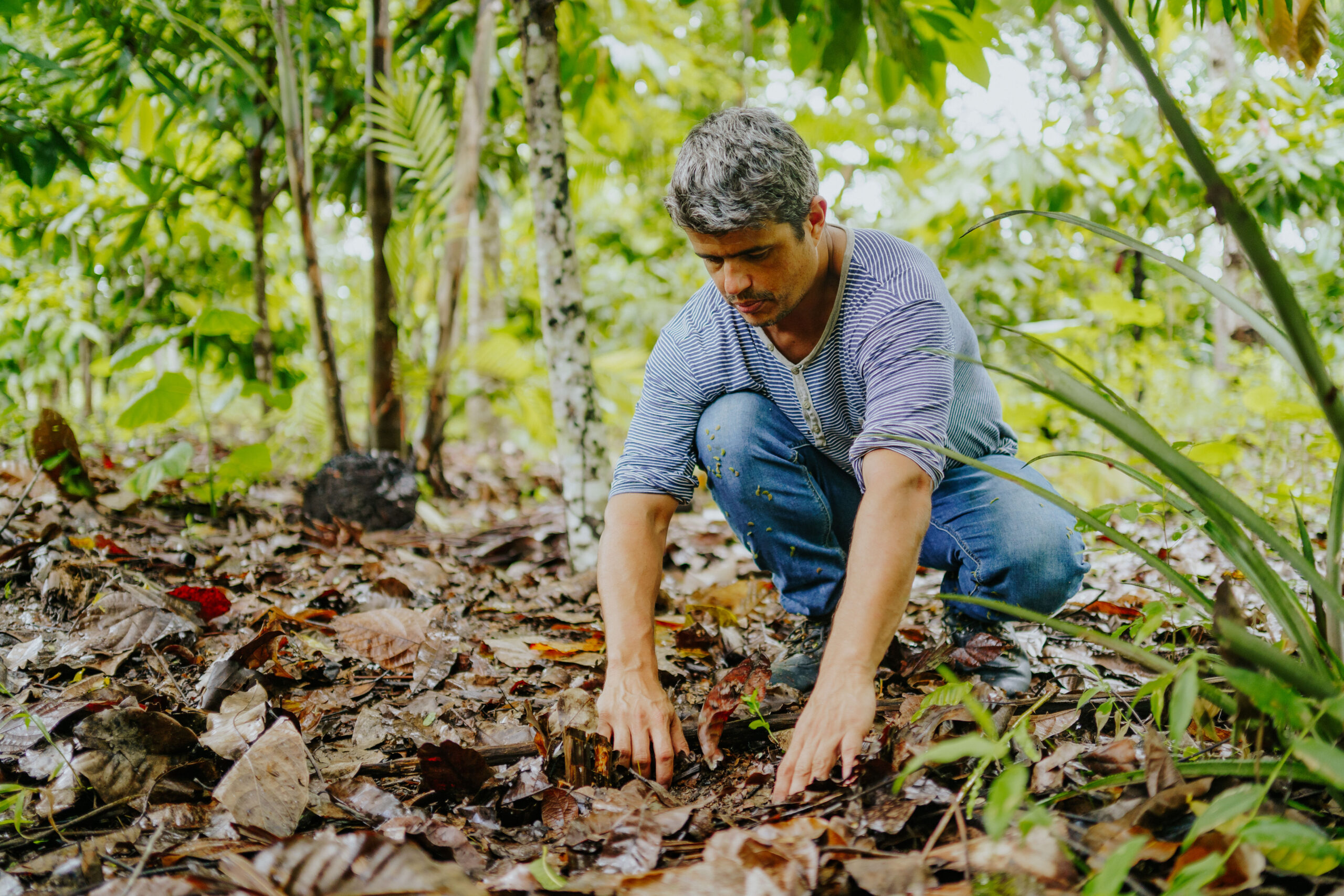
Agroforestry is a farming method in which trees and crops are deliberately grown together on the same piece of land. Instead of a bare field filled with a single crop, a diverse, layered system emerges that resembles a natural forest while simultaneously producing food, crops, and other products.
It is actually an ancient practice that modern agriculture abandoned for a long time in favor of large-scale monocultures. Agroforestry brings it back, but now with the knowledge and technology of the 21st century. At Project Amazone, for example, we plant at least nine different native plants and trees on degraded agricultural land in the Brazilian Amazon: from banana trees and açaí palms to endangered hardwood species such as mahogany and ipê.
Why is agroforestry so good?
1. It is climate-positive
Traditional agriculture is one of the largest sources of CO₂ emissions worldwide. Tilling the soil (necessary for most annual crops) releases stored carbon. With agroforestry, there is no need for tilling. The trees, shrubs, and the soil itself store CO₂ instead of emitting it. The result: climate-positive food that contributes to the fight against climate change.
2. It restores damaged land and biodiversity
Much agricultural land has been exhausted and depleted by years of intensive use. Agroforestry restores that land from within: tree roots improve soil structure, prevent erosion, and return fertility. At the same time, the diverse system creates habitat for animals, insects, and plants that have nowhere to go in a traditional monoculture. Land that seemed lost becomes a thriving ecosystem once more.
3. It protects the Amazon rainforest
As much as 80% of deforestation in the Amazon is caused by agriculture. By investing in regenerative agriculture, you show that things can be done differently — and help prove that protecting the rainforest is a better business model than cutting it down. At the same time, we actively replant endangered native tree species that would otherwise be lost forever.
4. It creates meaningful employment
Agroforestry is labor-intensive. Planting, maintaining, and harvesting requires many hands, providing work and economic security for local communities. Our project partner also employs many Venezuelan refugees: people who need it most. This means an investment in agroforestry also has a direct social impact.
5. It delivers an attractive financial return
Agroforestry is not only good for the planet — it is also a serious investment. The combination of agricultural crops and valuable hardwood trees generates income on both the short and long term. Through Project Amazon, you receive an expected average return of 7.3% per year. Impactful and profitable.

